
The main difference between state and props is that props are
immutable. This is why container component should define state that can
be updated and changed, while the child components should only pass data
from the state using props.
Using Props
When you need immutable data in your component you can just add props to reactDOM.render() function in main.js and use it inside your component.App.jsx
import React from 'react';

class App extends React.Component {
   render() {
      return (
         <div>
            <h1>{this.props.headerProp}</h1>
            <h2>{this.props.contentProp}</h2>
         </div>
      );
   }
}

export default App;
main.js
import React from 'react';
import ReactDOM from 'react-dom';
import App from './App.jsx';

ReactDOM.render(<App headerProp = "Header from props..." contentProp = "Content
   from props..."/>, document.getElementById('app'));

export default App;
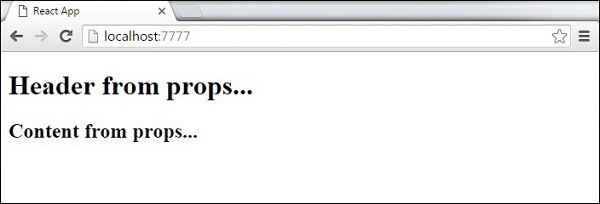
This will produce following result:
Default Props
You can also set default property values directly on the component constructor instead of adding it to reactDom.render() element.App.jsx
import React from 'react';

class App extends React.Component {
   render() {
      return (
         <div>
            <h1>{this.props.headerProp}</h1>
            <h2>{this.props.contentProp}</h2>
         </div>
      );
   }
}

App.defaultProps = {
   headerProp: "Header from props...",
   contentProp:"Content from props..."
}

export default App;
main.js
import React from 'react';
import ReactDOM from 'react-dom';
import App from './App.jsx';

ReactDOM.render(<App/>, document.getElementById('app'));
Output is the same as before.
State and Props
The example below shows how to combine state and props in your app. We are setting state in our parent component and passing it down the component tree using props. Inside render function, we are setting headerProp and contentProp that are used in child components.App.jsx
import React from 'react';

class App extends React.Component {
   constructor(props) {
      super(props);

      this.state = {
         header: "Header from props...",
         "content": "Content from props..."
      }
   }

   render() {
      return (
         <div>
            <Header headerProp = {this.state.header}/>
            <Content contentProp = {this.state.content}/>
         </div>
      );
   }
}

class Header extends React.Component {
   render() {
      return (
         <div>
            <h1>{this.props.headerProp}</h1>
         </div>
      );
   }
}

class Content extends React.Component {
   render() {
      return (
         <div>
            <h2>{this.props.contentProp}</h2>
         </div>
      );
   }
}

export default App;
main.js
import React from 'react';
import ReactDOM from 'react-dom';
import App from './App.jsx';

ReactDOM.render(<App/>, document.getElementById('app'));
The result will again be the same as in previous two examples, the only thing that is different is the source of our data, which is now originally coming from the state. When we want to update it, we just need to update state, and all child components will be updated. More on this in events chapter.


No comments:
Post a Comment