
In this chapter we will show you how to use aurelia-history plugin.
Step 1 - Install Plugin
This plugin is already available as a part of the standard configuration. If you have set aurelia.use.standardConfiguration() as a part of a manual configuration you are ready to go.main.js
export function configure(aurelia) {
   aurelia.use
   .standardConfiguration()
   .developmentLogging();

   aurelia.start().then(() => aurelia.setRoot());
}
Step 2 - Using History
We will use example from the last chapter (Aurelia - Routing). If we want to set functionality for navigating back or forward we can use history object with back() and forward() methods. We will add this after a router configuration.app.js
export class App {
   configureRouter(config, router){
      config.title = 'Aurelia';
      config.map([
         { route: ['','home'],  name: 'home',
            moduleId: './pages/home/home',  nav: true, title:'Home' },
         { route: 'about',  name: 'about',
            moduleId: './pages/about/about',    nav: true, title:'About' }
      ]);

      this.router = router;
   }

   goBack() {
      history.back();
   }

   goForward(){
      history.forward();
   }

}
Now let's add two buttons to our view.
app.html
<template>
   <nav>
      <ul>
         <li repeat.for = "row of router.navigation">
            <a href.bind = "row.href">${row.title}</a>
         </li>
      </ul>
   </nav>

   <button click.delegate = "goBack()"></button> //The button used for navigationg back...

   <button click.delegate = "goForward()"></button> //The button used for navigationg forward...

   <router-view></router-view>

</template>
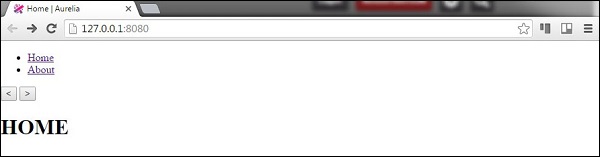
The users can navigate back and forward by clicking the buttons we added.


No comments:
Post a Comment