পৃষ্ঠাসমূহ

Search Your Article

CS


Welcome to GoogleDG – your one-stop destination for free learning resources, guides, and digital tools.

At GoogleDG, we believe that knowledge should be accessible to everyone. Our mission is to provide readers with valuable ebooks, tutorials, and tech-related content that makes learning easier, faster, and more enjoyable.

What We Offer:

  • 📘 Free & Helpful Ebooks – covering education, technology, self-development, and more.

  • 💻 Step-by-Step Tutorials – practical guides on digital tools, apps, and software.

  • 🌐 Tech Updates & Tips – simplified information to keep you informed in the fast-changing digital world.

  • 🎯 Learning Support – resources designed to support students, professionals, and lifelong learners.

    Latest world News 


Our Vision

To create a digital knowledge hub where anyone, from beginners to advanced learners, can find trustworthy resources and grow their skills.

Why Choose Us?

✔ Simple explanations of complex topics
✔ 100% free access to resources
✔ Regularly updated content
✔ A community that values knowledge sharing

We are continuously working to expand our content library and provide readers with the most useful and relevant digital learning materials.

📩 If you’d like to connect, share feedback, or suggest topics, feel free to reach us through the Contact page.

Pageviews

Monday, February 13, 2017

Aurelia - Custom Elements

Aurelia offers a way to add components dynamically. You can reuse single component on different pars of your app without need for including HTML multiple times. This chapter will explain how to achieve this.
Step 1 - Create custom component

Let's create new components directory inside src folder.
C:\Users\username\Desktop\aureliaApp\src>mkdir components
Inside this directory we will create custom-component.html. This component will be inserted later on our HTML page.

custom-component.html

<template>
   <p>This is some text from dynamic component...</p>
</template>

Step 2 - Create main component

We will create simple component in app.js. It will be used to render header and footer text on screen.

app.js

export class MyComponent {
   header = "This is Header";
   content = "This is content";
}

Step 3 - Add custom component

Inside our app.html file, we need to require the custom-component.html to be able to insert it dynamically. Once we do that, we can add new element custom-component.

app.html

<template>
   <require from = "./components/custom-component.html"></require>

   <h1>${header}</h1>
   <p>${content}</p>
   <custom-component></custom-component>
</template>
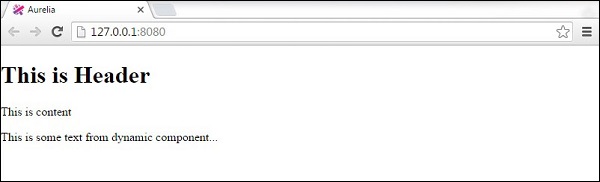
Image below shows the output. Header and Footer text is rendered from myComponent inside app.js. The additional text is rendered from the custom-component.js.
Aurelia Custom Elements Example

No comments:

Post a Comment