
To get started with developing using the Socket.IO, you need to have Node and npm(node package manager)
installed. If you don’t already have these, head over to Node setup to
install node on your local system. Confirm that node and npm are
installed by running the following commands in your terminal.
 This will create a package.json node.js configuration file. Now we need to install express and Socket.IO. To install these and save them to package.json file, enter the following command in your terminal, in your project directory:
Now we have our development environment set up. Lets get started with developing real time applications with socket.IO.
node --version
npm --version
You should get an output similar to:
v5.0.0
3.5.2
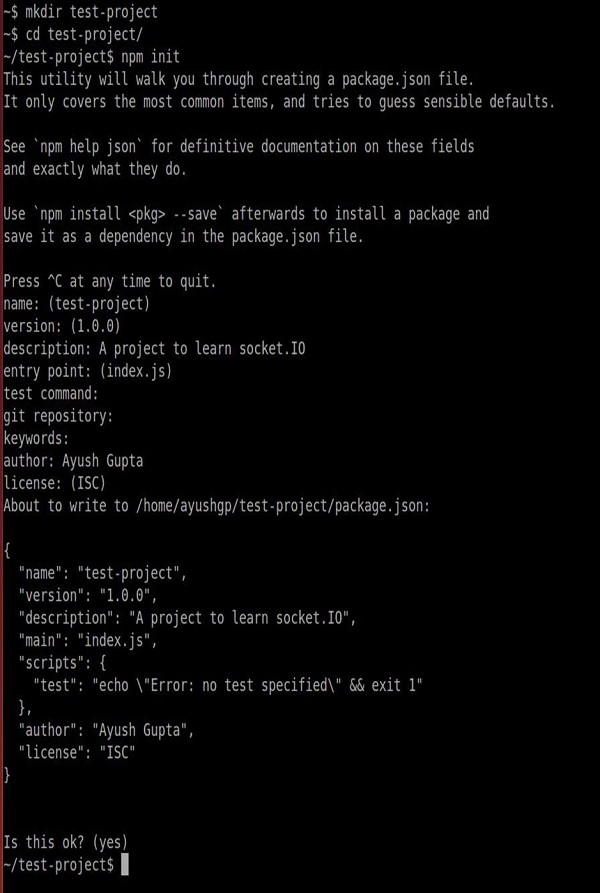
Open your terminal and enter the following in your terminal to create a new folder and enter the following commands:
$ mkdir test-project
$ cd test-proect
$ npm init
It'll ask you some questions, answer them in the following way:
This will create a package.json node.js configuration file. Now we need to install express and Socket.IO. To install these and save them to package.json file, enter the following command in your terminal, in your project directory:npm install --save express socket.ioOne final thing we need to keep restarting the server when we make changes is a tool called nodemon. To install nodemon open your terminal and enter:
npm install -g nodemonWhenever you need to start the server, instead of using node app.js use, nodemon app.js. This will ensure that you dont need to restart the server whenevr you change a file. It speeds up our development process.
Now we have our development environment set up. Lets get started with developing real time applications with socket.IO.


No comments:
Post a Comment