
Functions allow structuring the programs in segments of code to
perform individual tasks. The typical case for creating a function is
when one needs to perform the same action multiple times in a program.
Standardizing code fragments into functions has several advantages −
The most common syntax to define a function is −
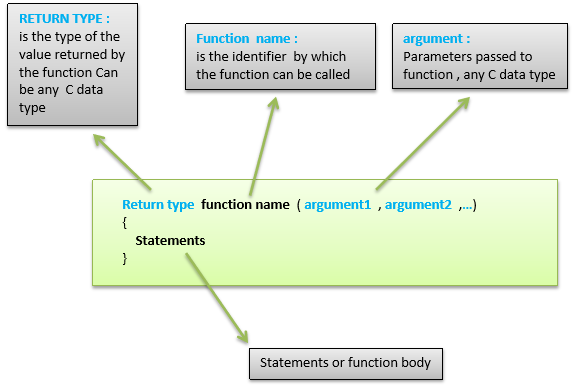
We can declare the function in two different ways −
The first way is just writing the part of the function called a function prototype above the loop function, which consists of −
The following example shows the demonstration of the function declaration using the first method.
Standardizing code fragments into functions has several advantages −
- Functions help the programmer stay organized. Often this helps to conceptualize the program.
- Functions codify one action in one place so that the function only has to be thought about and debugged once.
- This also reduces chances for errors in modification, if the code needs to be changed.
- Functions make the whole sketch smaller and more compact because sections of code are reused many times.
- They make it easier to reuse code in other programs by making it modular, and using functions often makes the code more readable.
The most common syntax to define a function is −
Function Declaration
A function is declared outside any other functions, above or below the loop function.We can declare the function in two different ways −
The first way is just writing the part of the function called a function prototype above the loop function, which consists of −
- Function return type
- Function name
- Function argument type, no need to write the argument name
The following example shows the demonstration of the function declaration using the first method.
Example
int sum_func (int x, int y) // function declaration {
   int z = 0;
   z = x+y ;
   return z; // return the value
}

void setup () {
   Statements // group of statements
}

Void loop () {
   int result = 0 ;
   result = Sum_func (5,6) ; // function call
}
The second part, which is called the function definition or declaration, must be declared below the loop function, which consists of −
- Function return type
- Function name
- Function argument type, here you must add the argument name
- The function body (statements inside the function executing when the function is called)
Example
int sum_func (int , int ) ; // function prototype

void setup () {
   Statements // group of statements
}

Void loop () {
   int result = 0 ;
   result = Sum_func (5,6) ; // function call
}

int sum_func (int x, int y) // function declaration {
   int z = 0;
   z = x+y ;
   return z; // return the value
}
The second method just declares the function above the loop function.


No comments:
Post a Comment